

The Academic Readiness Intervention System (ARISTM) is a new comprehensive early autism education curriculum based on the Language Builder® Picture Cards created over twenty years ago by STAGES® Learning and widely used in classrooms and therapeutic settings.
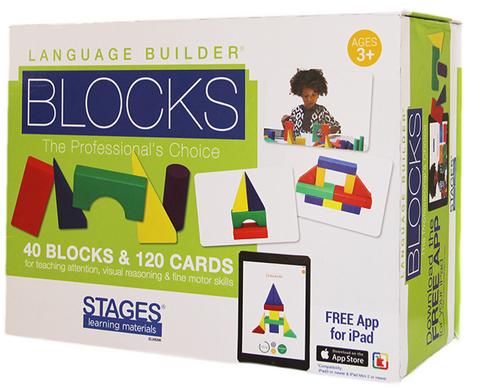
ARIS combines the research-based Language Builder Picture Card sets with 202 detailed lesson plans, scope and sequence with structured sequence guide, over 1200 photo flashcards, 64 realistic wooden and plastic figurines, 50 wooden blocks with structure cards and an iPad app, data keeping sheets, home communication sheets, reproducible activity sheets, behavior management forms, and pre- and post- assessments, for the most complete early autism education curriculum available today.
ARIS was designed to adhere to current research-based best practices for teaching language and social skills to children with autism. These include:
+ Photograph-based treatment approach to provide a high degree of iconicity and support mnemonic strategies most accessible to children with autism
+ Applied Behavior Analysis (ABA) practices for language development
+ 3-D to 2-D matching to provide multiple exemplars to support generalization of early language learning
+ Comprehensive structured curriculum to provide teachers and specialists with support to reduce their workload and allow them to focus on the student learning experience
+ Integrated parent-communication component to give parents support to help children generalize skills learned with their therapist or teacher
+ 20 Evidence Based Practices (EBPs) recommended by the National Professional Development Center on Autism Spectrum Disorder for language skill development for children with autism
+ Lessons in a Scope and Sequence following a standards-based learning progression correlating to the Common Core State Standards, Head Start Framework, ABLLS and VB-MAPP
Overview: Language Builder® Academic Readiness Intervention System (ARIS™)
The Academic Readiness Intervention System (ARIS)
is a comprehensive early autism education curriculum developed by STAGES® Learning and based on the Language Builder Picture Cards that have been a staple in autism, ABA and special needs programs and classrooms for more than 20 years.
Based on the principles of ABA therapy, and adapted
for the classroom, ARIS combines the research-based Language Builder Picture Card sets with lesson plans, scope and sequence with structured sequence guide, photo flashcards, realistic wooden and plastic figurines, data keeping sheets, home communication sheets, reproducible activity sheets, behavior management forms, and pre- and post- assessments.
The Language Builder® Picture Card Sets
The Language Builder Picture Card sets from STAGES® Learning are the most widely used photo language tools for teaching key language concepts to preschool age children; and children and adults with autism, developmental delay, or speech/language delay. Created over twenty years ago by a UCLA trained Behavioral Consultant who worked with pioneer researcher Dr. O. Ivar Lovaas at the Lovaas Institute, the Language Builder Picture Cards are based on established principles of ABA research for comprehensive language instruction. The Language Builder Series has become a staple in home and school programs across the world.
Numerous research studies have confirmed the effectiveness of the Language Builder Picture Cards
in the classroom and in therapeutic settings (See, for example: Lorah & Karnes 2016; Salvador et al., 2016; Sual & Spaho 2014; Rodríguez et al., 2013; Martin, 2013; Coon & Caio, 2012; Murphy, 2006; Chavez-Brown & Ross 2005; Foxx et al., 2004.)
|
Researchers |
Year |
Study |
|
Karnes, A., & Lorah, E.R. |
2016 |
Evaluating the language builder™ application in the acquisition of listener responding in young children with autism. Journal of Developmental and Physical Disabilities, 28, 255-265. |
|
Salvador, M., Marsh, A.S., Gutierrez, A., & Mahoor, M.H. |
2016 |
Development of an ABA autism intervention delivered by a humanoid robot. Lecture Notes in Computer Science, 9979, 551-560. |
|
Rodríguez, C.D., Cumming, T., & Strnadová, I. |
2014 |
Using iPads with students with disabilities: Lessons learned from students, teachers, and parents. Intervention in School and Clinic, 49(4), 244-250. |
|
Saul, A., & Spaho, E. |
2014 |
Using assistive technologies in autism care centers to support children develop communication and language skills. A case study: Albania. Academic Journal of Interdisciplinary Studies, 3(1), 203-212. |
|
Causin K.G., Albert, K.M., Carbone, V.J., & Sweeney- Kerwin, E.J. |
2013 |
The role of joint control in teaching listener responding to children with autism and other developmental disabilities. Research in Autism Spectrum Disorders, 7(9), 997-1011. |
|
Martin, Katrina Lucia. |
2013 |
Emotional Acuity in Children With and Without Autism Spectrum Disorder. UC Berkeley: Education. Dissertation. |
|
Coon, J.T., & Caio M.F. |
2012 |
The role of increased exposure to transfer-of-stimulus control procedures on the acquisition of intraverbal behavior. California State University, Sacramento Journal of Applied Behavior Analysis, 45(4), 657-666. |
|
Murphy, C.M. |
2006 |
The Comparative Effects of Simple and Complex Instructional Language on the Acquisition and Generalization of Receptive Language Tasks by Children with Autism. Ohio State University. Dissertation. |
|
Chavez-Brown, M., Scott, J., & Ross, D.E. |
2005 |
Antecedent selection: Comparing simplified and typical verbal antecedents for children with autism. Journal of Behavioral Education, 14(3), 153-165. |
|
Foxx, R.M., Schreck, K.A., Garito, J., Smith, A., & Weisenberger, S. |
2004 |
Replacing the echolalia of children with autism with functional use of verbal labeling. Journal of Developmental and Physical Disabilities, 16(4), 307-320. |
Researchers in the field of autism and language skill development choose to use the Language Builder Picture Cards because they are designed specifically for ABA treatment for children with autism and other language delays and can provide a consistent treatment tool to assist researchers in fine-tuning recommended therapeutic practices. The collection of cards provides identical cards to teach pre-language matching, cards to teach categorization and similarities, color cards, shape cards, and authentic photographic images to depict realistic pictures of objects in order to provide a high degree of iconicity (i.e. the similarity between an image and the actual object it represents). This high degree of iconicity is important in teaching language skills to children with autism (Deloache & Burns, 1994; Callahan, 2000; Hartley & Allen, 2015).
The Academic Readiness Intervention System (ARIS)
ARIS combines the research-based Language Builder Picture Card sets with 202 detailed lesson plans, scope and sequence with structured sequence guide, over 1200 photo flashcards, 64 realistic wooden and plastic figurines, 50 wooden blocks with structure cards and an iPad app, data keeping sheets, home communication sheets, reproducible activity sheets, behavior management forms, and pre- and post- assessments for the most complete early autism education curriculum available today. With development starting in 2016, this comprehensive curriculum is designed using Evidence Based Practices (EBPs) recommended by the National Professional Development Center on Autism Spectrum Disorder.
ARIS provides a comprehensive and structured complete curriculum to support special education teachers in their important work by greatly reducing the time they need to spend pulling together appropriate curricula, lesson plans, assessments, parent support resources, and lesson materials to support their teaching. The Language Builder Picture Cards are designed specifically to support ABA therapeutic strategies and the materials provided in the set provide the teacher or specialist with everything needed to carry out and track each lesson for every student. Likewise, 3-D objects correlated with the cards provide essential support for generalizing language skills for students with autism and other developmental delays.
ARIS can be used in an autism-only classroom or an inclusion setting that includes children on the lower end of the spectrum. It is designed for special education teachers, homeschooling parents, Board Certified Behavior Analysts (BCBAs), or Speech Language Pathologists (SLPs) doing pull-out or classroom based intervention for children with autism or related disorders or delays.
ARIS is specifically designed to meet the needs of students with moderate to severe Autism Spectrum Disorders (ASD). However, the curriculum is appropriate for students with a range of developmental or cognitive disabilities. The lessons in ARIS follow a logical progression that covers language, pre-academic, motor, social and self help skills that are critical to the academic and personal development of all students. The lessons in the ARIS curriculum are best suited to students from preschool through elementary school, but some may be appropriate for older students with more severe impairments.
|
Materials Included |
|
|
• Lesson plans with differentiation suggestions |
• Blackline master activity sheets |
|
• Photo stimulus materials |
• Parent communication aids |
|
• 3D manipulatives |
• Detailed implementation guide |
|
• Blocks |
• Record keeping |
|
• Behavior management system |
• Unlimited virtual support via email, phone and text. |
|
• iPad app to support the segment on blocks and fine motor. |
• Optional Professional Development: on- site training for implementation of Language Builder ARIS. |
Research Foundation
Photograph-Based Treatment Strategies
Difficulty with language acquisition is a common characteristic among children who have autism (Klin et al., 2002). It is estimated who at least 80% of children with autism who are younger than 5-years-old are non- verbal when they enter special education classes (Bondy & Frost, 1994) and 30% are minimally verbal at 9-years of age (Anderson et al., 2007).
Researchers have demonstrated that using photograph- based treatment strategies are effective in helping minimally verbal children with autism learn language skills (Flippin et al., 2010). Researchers have also confirmed what many parents of children with autism already inferred: children with autism are strong visual learners and process information differently from their typically developing peers. Accordingly, image-based methods such as the Picture Exchange Communication System (PECS) and the STAGES® Learning Language Builder Cards and Apps are commonly used in ABA therapy and in special education classrooms. Pictures “are one of the most widely available and effective of all the teaching material genres” for teaching language skills (Chang et al., 2005, p. 147).
Extensive research from the past two decades indicates that teaching children using real photographic images is more effective than using drawings or cartoons. Photographs depicting realistic pictures of objects provide a high degree of iconicity, the similarity between an image and the actual object it represents. This high degree of iconicity is important in teaching language skills to children with autism (Deloache & Burns, 1994; Callahan, 2000; Hartley, Allen & Cain, 2015). A recent study verified the findings of earlier researchers by demonstrating that children with autism and young, typically developing children can contextualize pictures and use them to adaptively guide their behavior and learning (Hartley & Allen, 2014). The researchers found that an important factor in this learning was a high degree of pictorial iconicity. Research has also shown that by presenting multiple exemplars (such as a picture card and showing students the image on an iPad), increased the rate at which children with autism were able to generalize the connection between an image and the actual object depicted in the image (Hartley, Allen & Cain, 2015).
The ability to generalize from a picture to a real object, or a stand-in for the real object such as a toy car, is directly tied to the iconicity of the picture or object. In a 2008 study, different groups of children were taught the name of a novel object using pictures of the object. One group was shown an actual photograph of the object, and the other group was shown a cartoon drawing of the object. When tested on their ability to attach the name they had learned from the pictures to the real object, the children who viewed the real photograph were better able to extend the label to the real object (Ganae, Pickard & DeLoache, 2008).
Researchers for the past twenty years have continued to verify that using clear visually realistic photographic images is crucial for teaching children with autism as well as other children with learning disabilities which impact language development (Hodgson, 1995; Hodgson, 1997; Roberson, 1977; Roberson et al., 1992). As early as 1998, the National Association for the Education of Young Children stated that using realistic photos and pictures was important and should be integrated into every early childhood program which strives to meet national standards of quality (NAEYC, 1998). Using line drawings, cartoons, or animations has proven less effective. Hodgdon (1995, pg 20) concludes that: “The effectiveness of visual supports comes, in large part, because the tools offer a non- transient message that accommodates for the processing time necessary for many students [with autism].”
In addition, realistic photographs support children with autism by assisting them in accessing mnemonics. Mnemonics are mental tools that help people remember new information by storing new information with already known information, such as connecting the letter “B” to the word “Banana.” For a child with autism, using visual cues, such as clear photographs on plain white cards, provides strong visual cues to help them develop mnemonic devices and learn new words. Playing to the visual learning strength of children with autism can facilitate language learning and greatly improve a child’s ability to understand and communicate, allowing the child to be more independent and successful in developing life skills. Visual communication tools including objects, photographs, and digital photographs provide necessary supports for improving language skills for children with autism.
Applied Behavior Analysis (ABA) for Language Development
Hundreds of research studies have confirmed that Applied Behavior Analysis (ABA) is the most effective and comprehensive approach for improving the lives of children with autism (Matson et al., 1996; Matson & Smith, 2008). Today, more than 25 states have passed laws mandating insurance coverage for ABA therapy because it is viewed as having the most promising treatment outcomes for children with autism.
Research on ABA started in the 1960s with pioneer researchers Ivar Lovaas, Charles Ferster, Montrose Wolf and others. In 1981, an extensive review of the research on ABA summarized a decade of research and confirmed the effectiveness of ABA treatment therapies for treating autism (DeMyer et al.,1981). In 1996, researchers reviewed 251 studies on ABA and autism and validated the effectiveness of these therapies (Matson et al., 1996). The researchers concluded in their review that, since 1980, ABA treatment has become increasingly sophisticated and beneficial.
Early Intensive Behavioral Intervention (EIBI) is a subset of ABA therapy that uses a group of strategies to help children with autism learn. A chief component of EIBI is discrete trial training (DTT). DTT is a method of teaching in highly structured and simplified steps. Instead of teaching an entire skill at once, the skill is broken down and “built-up” using discrete trials that teach each step one at a time (Anderson & Romancyzk, 1999; Smith, 2001). When done correctly and devoting significant amounts of time to these discrete trials, EIBI using DTT has proven extremely effective.
EIBI is carried out in a one-on-one environment with a specialist or teacher working directly on specific skills and skill levels of the individual learner. It is the most studied form of ABA and is based on operant learning focused on the development of language, self-help, and social skills (Sturmey & Fitzer, 2007). Parent participation in therapy is essential and helps children generalize skills learned with their therapist or teacher (Lovaas, 2003).
In 2010, a meta-analytic study of the effectiveness of comprehensive ABA-based early intervention programs for children with autism concluded that based on 11 studies with 344 children with autism, the experimental group of children that received EIBI as compared to control groups outperformed the control group on IQ, non-verbal IQ, expressive and receptive language and adaptive behavior. They concluded that their findings strongly indicated support for the effectiveness of ABA/ EIBI therapy (Peters-Scheffer et al., 2010).
3-D to 2-D Matching Images to Support Generalization
Teaching early language skills to children with autism often begins with having children match identical objects. Before a child can learn that the picture of an object actually represents a real item (picture-object correspondence), the child may need to start learning by matching actual physical objects. It is often necessary to start by matching 3-D objects such as cups or toy cars and later transition to matching identical images on cards (Blumberg & Hurley, 2007).
Teaching daily living skills to children with autism often depends on using activity schedules and sequencing charts. These tools are effective only at the point at which children have mastered the prerequisite skills of matching a 2-D image to a 3-D object (Haas, 2011). Until a child has the capacity to understand that a 2-D image, such as a picture of a toothbrush, represents an actual object, being able to prompt a child to engage in brushing their teeth cannot be accomplished using an activity schedule or card. Some children will eventually be able to move from seeing an actual toothbrush, to recognizing a card that has a photographic image of a toothbrush, to recognizing the word “toothbrush.” Other children with more severe language delays will only be able to respond to 3-D prompts (Baynham, 2007).
In a study using different types of photographs, symbols, and objects to teach language skills to 40 non-verbal subjects with autism, the real objects proved to be much more readily recognized than any of the other representations of objects (Mirenda & Locke, 1989). Typically developing infants and children under the age of three also learn from viewing 3-D objects and often cannot process a 2-D picture of an object until a later age. Researchers testing 5-month-old infants found that these infants could not understand 2-D images, but when presenting with the same content in 3-D representations, infants were able to understand the objects. The researchers found that by examining 3-D objects children naturally learn about objects in their world and that being able to examine a 3-D object provides additional sensory information rather than just viewing a 2-D image on a card (Mash & Boornstein, 2012).
Comprehensive Structured Curriculum with Integrated Parent Training
ARIS curriculum is built upon a comprehensive Scope and Sequence (SAS) which lets teachers know which lessons to introduce and in which order. Many special needs teachers, by necessity, must adapt a general education curriculum to serve the needs of their students, though these needs differ greatly from the needs of typically developing students (Warren, 2001). Special education teachers often have to understand curriculum in multiple grades because of the diverse skill levels of their students. In some cases, due to a shortage of time, special education teachers use Individualized Education Plans (IEPs) to create an instructional approach for a student, though an IEP is not meant to be a full curriculum.
A comprehensive and easy to use curriculum helps support special needs teachers and makes their jobs easier to manage. The turnover rate for special education teachers is an ongoing problem for schools. Twelve percent of special education teachers leave the profession each year, twice the rate of other teachers (NCPS, 2015) When teachers leave, it is challenging to maintain high quality consistent programs for students with disabilities.
Stress related to an overwhelming workload and “frustrations with workload manageability” are key predictors of special education teachers leaving the
field (Brownell et al., 1997; Billingsley, 2004). In a survey conducted by the Council for Exceptional Children (Warren, 2001), interviews with special education teachers suggested that their primary concern is with the curriculum. The Council found that a primary task for these teachers was to modify existing curricula so that students with disabilities can experience success in school. Many new teachers said they felt overwhelmed at the beginning of the school year when reviewing district curriculum guides and scope and sequence charts. They said they felt “overwhelmed and somewhat frustrated with all this information given to them so early and so quickly.” Some of the teachers reported that they felt they had a good understanding of the curriculum and how to adapt it, but that they had no materials with which to implement a curriculum adapted for their students (Warren, 2001).
For special needs teachers and their students with autism, having a clearly organized and structured research-based curriculum is essential. Students with autism greatly benefit from an environment that is predictable, organized and well structured (Panerai et al., 2009). Consistency is important for the education of any student, but for students with disabilities, consistency provides a safe and predictable environment to reduce anxiety and behavior problems so that learning can occur. Instituting a well-organized curriculum also provides for an effective environment for teacher training and evaluation (Darling- Hammond, 2012).
Parent training is a key component of a well-organized curriculum for special needs teachers working with children with autism. Parent training has been shown
to be essential for promoting generalization and maintenance of skills for children with autism (Ingersoll & Dvortcsak, 2006). The research on incorporating parent involvement in curriculum and therapy for children with autism has been well documented in the research literature over the past few decades (Lovaas et al., 1973; Koegel et al., 1996; Mahoney et al., 1999). However, many public school programs do not incorporate parent training into the special education curriculum. Research tells us that a key barrier to providing effective parent training includes parent education models that can be easily implemented in special education classrooms as part of a curriculum plan (Ingersoll & Dvortcsak, 2006).
Evidence Based Practices (EBP) Recommended by the NPDC
Evidence Based Practices (EBP) are interventions that have been proven to be effective and are based on solid scientific research. From 2007 to 2014, the National Professional Development Center on Autism Spectrum Disorder developed a rigorous set of criteria to identify 27 EBPs that have been proven effective for the treatment of autism. An intervention qualified as an EBP if it met one of the following criteria:
+ Based on at least two randomized or quasi- experimental design studies
+ High quality, single subject designs carried out by different research groups with a minimum of 20 participants
+ A combination of either a randomized or quasi- experimental group design study and a minimum of three single subject design studies carried out by different researchers.
The NPDC has created online training modules to provide step-by-step instructions on using EBPs. These are available online for free at the Autism Focused Intervention Resources and Modules (AFIRM) site.1
Of the 27 EBPs recommended, 20 are directly applicable to developing language skills in children with autism. They are as follows:
|
Practice |
Description |
|
Antecedent-based Intervention (ABI) |
Antecedent-based interventions can be used to decrease an identified interfering behavior and increase engagement by modifying the environment. |
|
Differential Reinforcement of Alternative, Incompatible, or Other Behavior (DRA/I/O) |
Differential reinforcement of other behaviors means that reinforcement is provided for desired behaviors, while inappropriate behaviors are ignored. |
|
Discrete Trial Training (DTT) |
Discrete trial training consists of an adult using adult-directed, massed trial instruction, reinforcers, and clear contingencies and repetition to teach a new skill or behavior. |
|
Extinction (EXT) |
Extinction involves withdrawing or terminating the positive reinforcer that maintains an inappropriate interfering behavior. |
|
Functional Behavior Assessment (FBA) |
A functional behavior assessment can be used when the intensity, duration, or type of interfering behavior creates safety concerns or impacts a child’s development. |
|
Functional Communication Training (FCT) |
Functional communication training (FCT) emerged from the literature on functional behavioral assessment (FBA) as a systematic practice to replace inappropriate behavior or subtle communicative acts with more appropriate and effective communicative behaviors or skills. |
|
Modeling (MD) |
By using modeling (MD), the learner with ASD can acquire and generalize new skills/behaviors. |
Research Based Design of Language Builder and ARIS
The Language Builder Picture Cards and the new ARIS complete curriculum set have been designed to reflect research based best practices to support teachers and specialists in helping children with autism develop language and social skills in order to foster independence and success.
ARIS uses ABA treatment strategies and provides educators, SLPs and BCBAs with everything they need to walk into an instructional setting and focus on the learning needs of their students. By developing an inclusive curriculum that is built on twenty Evidence Based Practices recommended by the National Professional Development Center on Autism Spectrum Disorder, teachers, therapists and their students will experience positive outcomes in skill development.
|
Strategy |
Research Foundation |
ARIS |
|
Photograph-Based Treatment |
Extensive research from the past two decades indicates that teaching children using real photographic images is more effective than using drawings or cartoons. (See e.g.: Chang et al., 2005, Flippin et al., 2010) |
√ |
|
Applied Behavior Analysis (ABA) for Language Development |
Extensive literature reviews of hundreds of research studies have confirmed the effectiveness of ABA treatment for helping children with autism develop language and social skills. (See, e.g., DeMyer, et al 1981; Matson and Smith 2008). |
√ |
|
3-D to 2-D Matching to Support Generalization |
Before a child with autism can learn that the picture of an object actually represents a real item (picture-object correspondence) the child may need to start the learning process by matching 3-D objects to 2-D images on cards. (See, e.g., Blumberg & Hurley 2007; Haas 2011). |
√ |
|
Comprehensive Structured Curriculum with Integrated Parent Training |
For special needs teachers, a comprehensive and structured research-based curriculum is essential for learning to be successful. (See, e.g., Warren 2001; Panerai et al., 2009) Parent training needs to be incorporated into the curriculum for promoting generalization and maintenance of skills for children with autism (Ingersoll & Dvortcsak 2006). |
√ |
|
20 Evidence Based Practices (EBP) |
EBP are interventions that have been proven to be effective and are based on solid scientific research. From 2007 to 2014, the National Professional Development Center on Autism Spectrum Disorder developed a rigorous set of criteria to identify 27 EBPs that have been proven effective for the treatment of autism; 20 of these apply directly to language development. |
√ |
References
Allen, M.L., Hartley, C., & Cain, K. (2015). Do iPads promote symbolic understanding and word learning in children with autism? Frontiers in Psychology, 6, 138.
Anderson D. K., Lord C., Risi S., DiLavore P. S., Shulman C., Thurm A., et al. (2007). Patterns of growth in verbal abilities among children with autism spectrum disorder. J. Consult. Clin. Psychol.75, 594-604.
Anderson, S.R., & Romancyzk, R. (1999). Early intervention for young children with autism: Continuum-based behavior models. Research and Practice for Persons with Severe Disabilities, 24, 162-173.
Baynham, Tanya Yvonne. (2007). Training a non-match response: Toward a technology for determining controlling stimulus dimensions for two children with autism. University of North Texas, Dissertation. ProQuest Dissertations Publishing.
Billingsley, B.S.(2003). Special education teacher retention and attrition: A critical analysis of the research literature. The Journal of Special Education, 38(1), 39-55.
Blumberg, E.R. & Hurley, E. (2007). Enhancing Early Intervention for Parents of Young Children with Autism Spectrum Disorders: Information, Strategies, &
Resources. New Brunswick, NJ: The Elizabeth M. Boggs Center on Developmental Disabilities.
Bondy A. S., & Frost L. A. (1994). The picture exchange communication system. Focus on Autism and Other Developmental Disabilities, 9, 1-19.
Brownell, M.T., Smith, S.W., McNellis, J.R., & Miller, D.M. (1997). Attrition in special education: why teachers leave the classroom and where they go. Exceptionality, 7(3), 143-155.
Callaghan T.C. (2000). Factors affecting children’s graphic symbol use in the third year: language, similarity, and iconicity. Cognitive Development, 15, 185-214.
Causin K.G., Albert, K.M., Carbone, V.J., & Sweeney- Kerwin, E.J. (2013). The role of joint control in teaching listener responding to children with autism and other developmental disabilities. Research in Autism Spectrum Disorders, 7(9), 997-1011.
Chang Y., Lin C., & Lee Y. (2005). The preferences of young children for images used in dynamic graphical interfaces in computer-assisted english vocabulary learning. Displays, 26, 147-152.
Chavez-Brown, M., Scott, J., & Ross, D.E. (2005). Antecedent selection: Comparing simplified and typical verbal antecedents for children with autism. Journal of Behavioral Education, 14(3), 153-165.
Coon, J.T., & Caio M.F. (2012). The role of increased exposure to transfer-of-stimulus control procedures on the acquisition of intraverbal behavior. California State University, Sacramento Journal of Applied Behavior Analysis, 45(4), 657-666.
Darling-Hammond, L. (2012). Creating a comprehensive system for evaluating and supporting effective teaching. Stanford, CA. Stanford Center for Opportunity Policy in Education.
DeLoache J.S., & Burns, N.M. (1994). Early understanding of the representational function of pictures. Cognition, 52, 83-110.
DeMyer, M. K., Hingtgen, J. N., & Jackson, R. K. (1981). Infantile autism reviewed: A decade of research.
Schizophrenia Bulletin, 7, 388-451.
Flippin, M., Reszka, S., & Watson, L.R. (2010). Effectiveness of the picture exchange communication system (PECS) on communication and speech for children with autism spectrum disorders: A meta-analysis. American Journal of Speech-Language Pathology, 19, 178-195.
Foxx, R.M., Schreck, K.A., Garito, J., Smith, A., & Weisenberger, S. (2004). Replacing the echolalia of children with autism with functional use of verbal labeling. Journal of Developmental and Physical Disabilities, 16(4), 307-320.
Ganea P.A., Pickard M.B., & DeLoache, J.S. (2008). Transfer between picture books and the real world by very young children. Journal of Cognition and Development, 8, 180-185.
Haas, Stephanie Iwanciow. (2011). “Teaching daily living skills to young adults with autism: the creation of
a curriculum guide for special education teachers.” California State University: M.A. Thesis. Available: http://digitalcommons.csumb.edu/caps_thes/426
Hartley, C., & Allen, M.L. (2014). Iconicity influences how effectively minimally verbal children with autism and ability-matched typically developing children use pictures as symbols in a search task. Autism, 19(5), 570-579
Hartley C., & Allen, M. (2014). Intentions vs. resemblance: understanding pictures in typical development and autism. Cognition, 131, 44-59.
Hodgdon, L.Q. (1995). Solving social-behavioral problems through the use of visually supported communication. In
K.A. Quill (Ed.), Teaching children with autism: Strategies to enhance communication and socialization. New York: Delmar Publishers Inc.
Hodgdon, L.Q. (1997). Visual strategies for improving communication: Practical supports for school and home. Troy, MI: QuirkRoberts Publishing.
Ingersoll, B., & Dvortcsak, A. (2006). Including parent training in the early childhood special education curriculum for children with autism spectrum disorders. Topics in Early Childhood Education, 26(3), 79-87.
Karnes, A., & Lorah, E.R. (2016). Evaluating the language builder™ application in the acquisition of listener responding in young children with autism. Journal of Developmental and Physical Disabilities, 28, 255-265.
Klin A., Jones W., Schultz R., Volkmar F., & Cohen D. (2002). Defining and quantifying the social phenotype in autism. The American Journal of Psychiatry, 159, 895-908.
Koegel, R. L., Bimbela, A., & Schreibman, L. (1996). Collateral effects of parent training on family interactions. Journal of Autism and Developmental Disorders, 26, 347-359.
Lovaas, O. I., Koegel, R. L., Simmons, J. Q., & Long, J. S. (1973). Some generalization and follow-up measures on autistic children in behavior therapy. Journal of Applied Behavior Analysis, 6(1), 131-166.
Mahoney, G., Kaiser, A., Girolametto, L., MacDonald, J., Robinson, C., Safford, P., et al. (1999). Parent education in early intervention: A call for a renewed focus. Topics in Early Childhood Special Education, 19(3), 131-140.
Martin, Katrina Lucia. (2013). Emotional Acuity in Children With and Without Autism Spectrum Disorder. UC Berkeley: Education. Dissertation. Available: https:// escholarship.org/uc/item/47n5z2kb
Mash, C., & Bornstein, M. H. (2012). 5-month-olds’ categorization of novel objects: Task and measure dependence. Infancy, 17, 179-197.
Matson, J. L., Benavidez, D. A., Compton, L. S., Paclawskyj, T., & Baglio, C. (1996). Behavioral treatment of autistic persons: A review of research from 1980 to the present. Research in Developmental Disabilities, 17(6), 433-465.
Matson, J.L., & Smith, K.R.M. (2008). Current status of intensive behavioral interventions for young children with autism and PDD-NOS. Research in Autism Spectrum Disorders, 2, 60-74.
Mirenda, P., & Locke, P. (1989). A comparison of symbol transparency in nonspeaking persons with intellectual disabilities. Journal of Speech and Hearing Disorders, 54, 131-140.
National Coalition on Personnel Shortages in Special Education and Related Services. (2015). Retrieved from: http://specialedshortages.org
Ok, M.W., & Kim, W. (2014). Use of iPads and iPods for academic performance and engagement of prek-12 students with disabilities: A research synthesis. Journal of Exceptionality a Special Education Journal, 25(1), 1-15.
Panerai, S., Zingale, M., Trubia, G., Finocciaro, M. Zuccarello, R., Ferri, R., & Elia, M. (2009). Special education versus inclusive education: The role of the TEACCH program. Journal of Autism and Developmental Disorders, 39(6), 874-882.
Rodríguez, C.D., Cumming, T., & Strnadová, I. (2014). Using iPads with students with disabilities: Lessons learned from students, teachers, and parents. Intervention in School and Clinic, 49(4), 244-250.
Roberson, W.H., Gravel, J.S., Valcante, G.C., & Maurer, R.G. (1992). Using a picture task analysis to teach students with multiple disabilities. Teaching Exceptional Children, 24(4), 12-15.
Robinson-Wilson, M.A. (1977). Picture recipe cards as an approach to teaching severely and profoundly retarded adults to cook. Education and Training of the Mentally Retarded, 12, 69-73.
Salvador, M., Marsh, A.S., Gutierrez, A., & Mahoor, M.H. (2016). Development of an ABA autism intervention delivered by a humanoid robot. Lecture Notes in Computer Science, 9979, 551-560.
Saul, A., & Spaho, E. (2014). Using assistive technologies in autism care centers to support children develop communication and language skills. A case study: Albania. Academic Journal of Interdisciplinary Studies, 3(1), 203-212.
Scheffer, P., Didden, R., Korzilius, H., & Sturmey, P. (2011). A meta-analytic study of the effectiveness of
comprehensive ABA-based early intervention programs for children with autism spectrum disorders. Research in Autism Spectrum Disorders, 5(1), 60-69.
Smith, T. (2001). Discrete trial training in the treatment of autism. Focus on Autism and Other Developmental Disabilities, 16, 86-72.
Warren, S.H. (2001). The mentoring induction project: supporting beginning special education professional— curriculum concerns of new teachers. Teaching Exceptional Children, 34(2), 89.
White, M., Mason, C., & Hoffengardner, S. (2001). The mentoring induction project: Supporting beginning special education professionals—Curriculum concerns of new teachers. Teaching Exceptional Children, 34(2), 89.

Comments
No comments yet — be the first to share your thoughts.