
Curriculum + Materials.
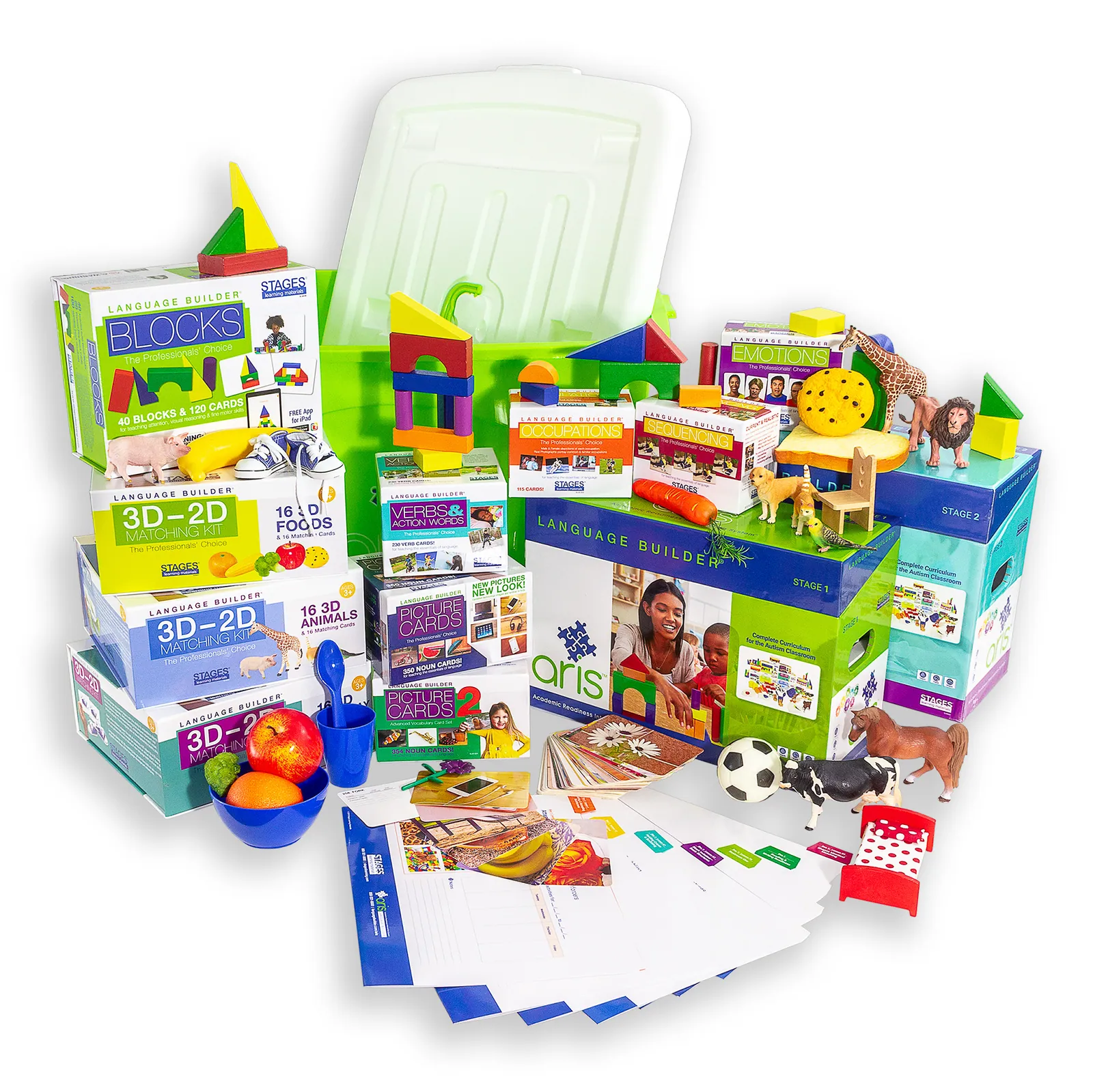
A complete, sequenced curriculum. Physical kits ship with every deployment.
A customizable special education program with consistent materials, reliable progress monitoring, and real-time data visibility. Standards aligned. Audit-ready. Evidence rolling up to you in real time — not reconstructed at year-end.

Tuesday · 9:14 AM
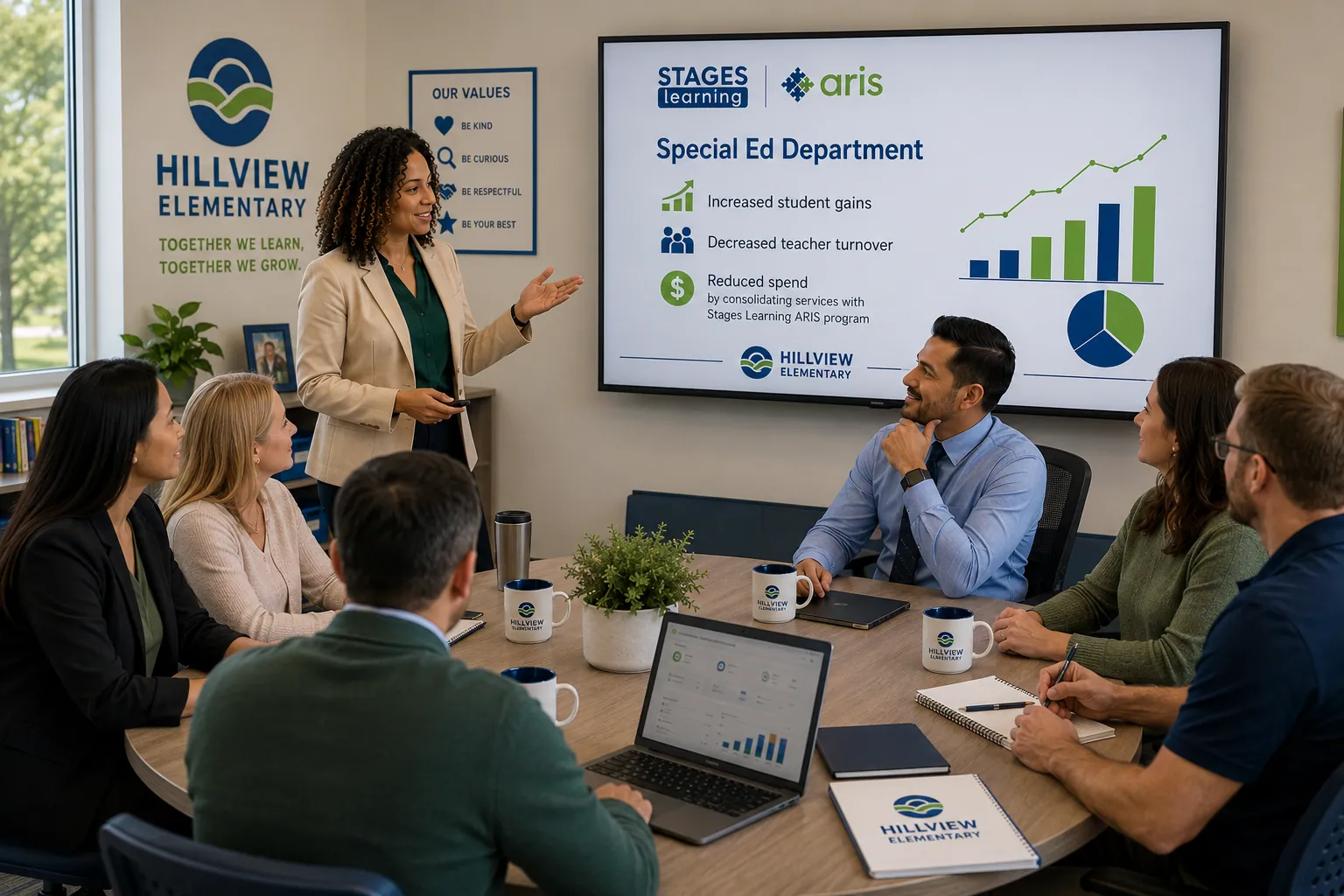
Cabinet meeting at 11. The evidence is already on the screen.
 Hillview Unified · Overview
Live
Hillview Unified · Overview
Live
487
Students
38
Classrooms
12
Schools
Step 1
Flexible curriculum. Personalized pathways. Meaningful progress.
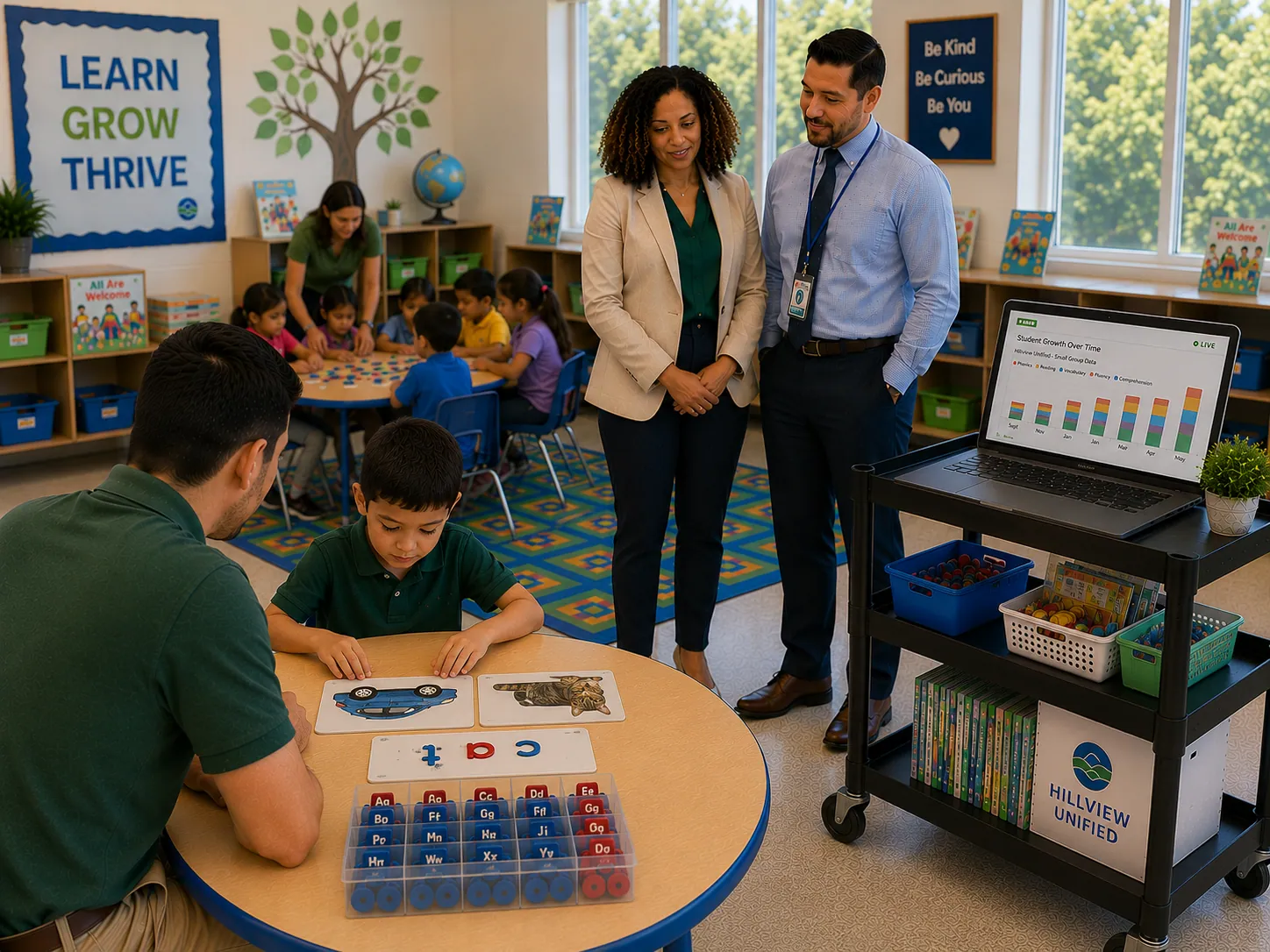
ARIS helps educators adapt instruction and support students lacking foundational skills with individualized learning experiences.
One special education program that includes assessment, lesson sequence, materials, data system, and coaching support across special education and early childhood classrooms. A consistent framework that supports individualized learning pathways for every student.
Most districts build their special education programming over time — different curricula across buildings, legacy materials still in use, and disconnected tools layered in along the way. ARIS helps bring those pieces together through a cohesive, adaptable system that supports differentiated instruction while giving districts clearer visibility into implementation, progress, and outcomes.
Hillview Unified · Overview
Live





Step 2 · Real Growth
Real skills growth, broken out by domain — so you can see where the program is working, and where to coach.
A district program is only worth running if students actually move. ARIS makes that movement visible — at every level, across every skill domain.
Growth shows up in every roll-up — student, classroom, school, and district — broken out by domain, so you can see where the program is working hardest and where to coach more deeply.
Step 3 · Aligned to Frameworks
Every lesson mapped to the standards and assessments your district has to answer to.
Lessons · Receptive Labeling
Live
Language · Receptive Language
Lesson 19
VB-MAPP
Listener Responding · Milestone 5
ABLLS-R
C-5 · C-12
Head Start ELOF
Language & Communication · Goal P-LC 6
State ELA · K.L.5.a (or local equivalent)
Sort common objects into categories
IDEA Indicator 7
Preschool Outcome B
Same alignment in every classroom. Exportable for any audit.
Export PDFThe state comes for a monitoring visit. The board asks if the program is standards-aligned. A new family asks how this maps to VB-MAPP. You shouldn't be opening a binder to answer any of these.
ARIS teaches more than a thousand scaffolded skills, all mapped to VB-MAPP, ABLLS-R, the Head Start Early Learning Outcomes Framework, and state ELA and Math standards — alignment available for every lesson, exportable for every audit, and consistent across every classroom that runs the program.
Step 4 · Program in Motion
Fidelity, coaching, and PD — visible district-wide, in real time. The buildings you can't visit this week are flagged before they drift.
The hard part of a district program isn't picking it — it's keeping it running across buildings you can't visit every week. Classrooms quietly drift, and you don't find out until you go asking.
ARIS shows the program in motion district-wide — onboarding, coaching, and fidelity by site, with Stages's implementation team working inside the same view. The sites that need attention surface on their own.
 Hillview Unified · Program Health
Live
Hillview Unified · Program Health
Live
District fidelity
84%
target 80%
Coaching this week
14/18
touchpoints completed
Sites needing visit
1
flagged · early
Coaching & PD · this month
18
Onsite visits
24
Live virtual sessions
312
Teacher touchpoints
Step 5 · Evidence Rolls Up
Student → classroom → school → district. Generated as teachers teach.
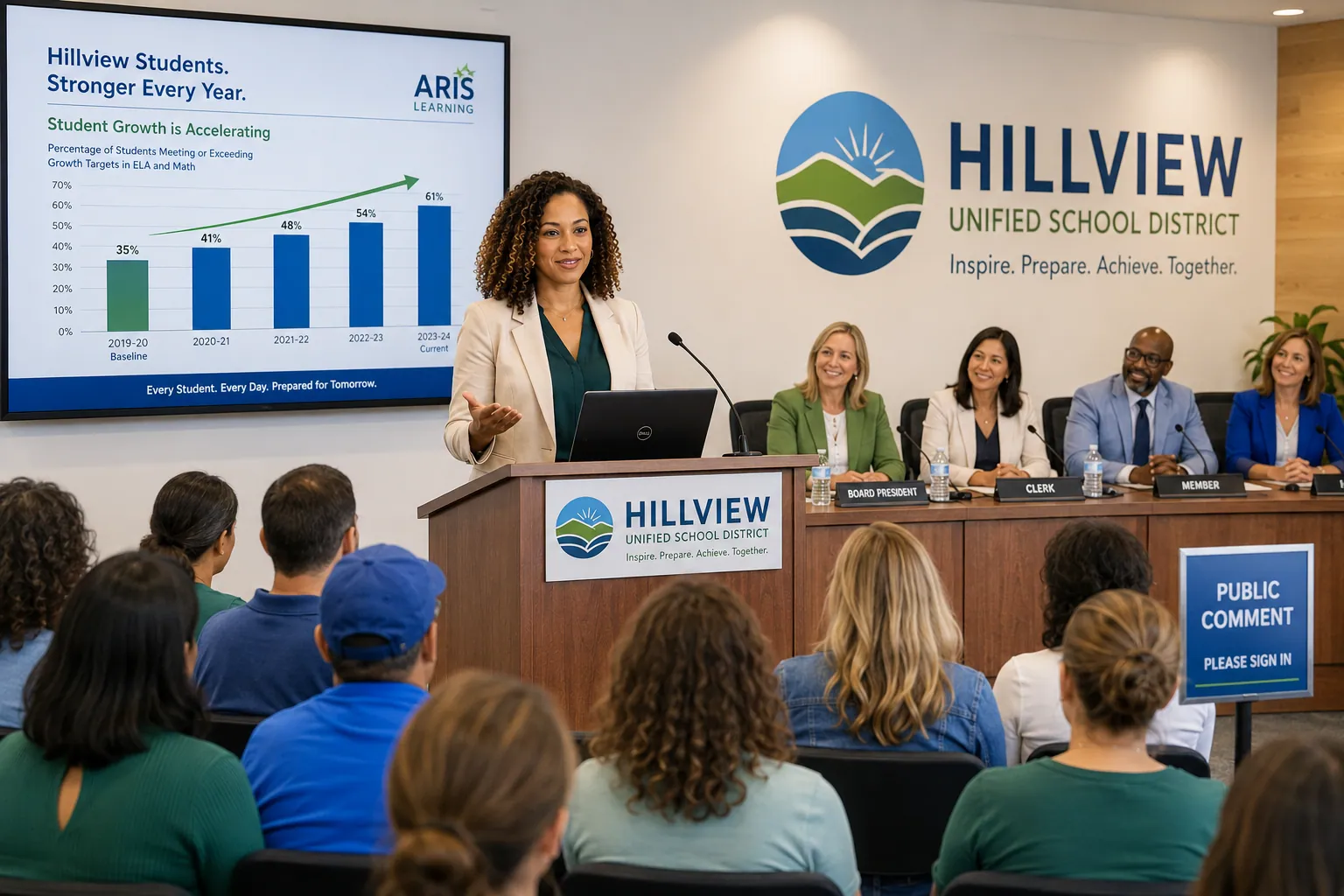
Most district reporting on special ed is reconstructed once a year, late, from incomplete sources, by someone who didn't collect any of it. The board hears "teachers say it's going well." Parents hear vague reassurances. The state gets a slide deck that doesn't match the underlying data.
ARIS rolls evidence up automatically. Every data point a teacher takes during a lesson rolls into student progress, classroom progress, school progress, and district progress — broken out by skill category, by site, and by sub-population. The board chart you need for Tuesday is already built. The state report is already exportable. The cabinet conversation has actual numbers behind it.
Step 6 · Audit-Ready
For any single student, the assessment-to-data chain is already assembled — for the IEP team, the parent meeting, the state monitor, or the dispute.
Every district faces the same moments — a monitoring visit, a parent dispute, an audit request with no warning. Each one comes down to whether the IEP and the data tell the same story.
In ARIS the chain is built in: the assessment sets the present levels, goals are written against it in IDEA-compliant language, lessons move each goal forward, and every data point is timestamped and mapped back. When the question comes, the answer is already assembled.
Amy Johnson · IEP Audit View
Live
Amy Johnson · Audit view
Chain completeAssessment
Skills assessment · Sept 12, 2025
Receptive Labeling: 41% baseline
Goal
“Amy will receptively label 20 common nouns across 4 categories with 80% accuracy across 3 consecutive sessions.”
Activated Sept 18, 2025 · IDEA-compliant
Lessons
L19 · L24 · L27
Auto-mapped to this goal
Data
47 data sessions · last 9 days
3 staff members · trend +18% over 90 days
Progress report
Generated for Q2 IEP team meeting · March 2026
PDF · attached to the parent record
Every row links to the underlying record.
Export audit packetMost districts buy this as five separate contracts — curriculum, assessment, data, IEP writing, and PD. ARIS makes it one line item on one renewal: one number to budget, one spend to defend, one team accountable.
A complete, sequenced curriculum. Physical kits ship with every deployment.
Built in. One chain of evidence.
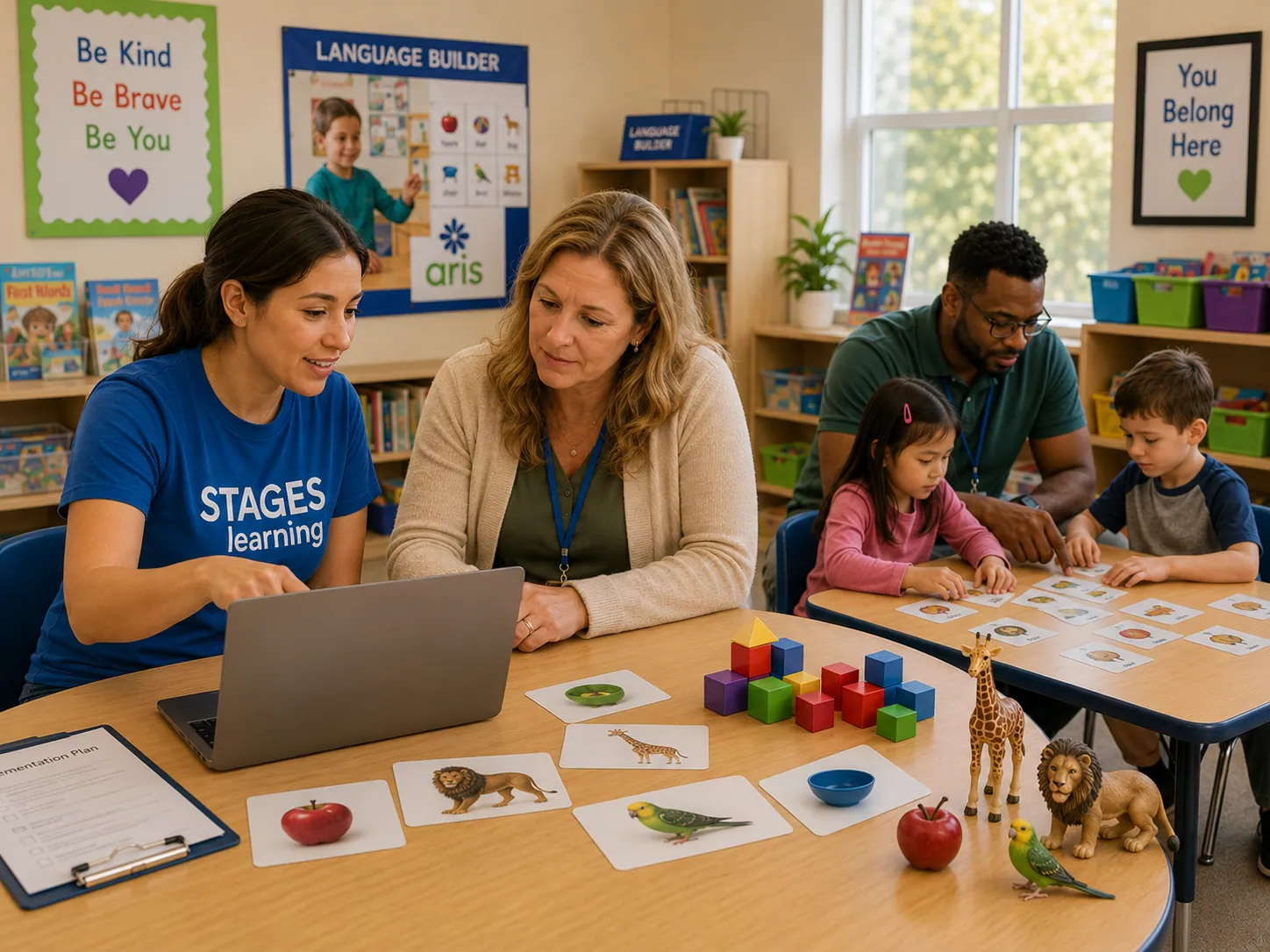
Embedded, scheduled, and visible to you.
“Each lesson is designed with explicit goals and objectives, making it easy for educators to plan and implement lessons while adapting to individual student needs.”
“ARIS has aligned with our special education program by providing a curriculum that meets our students' needs. Teachers are able to figure out where their students are educationally and be intentional about where to start and where to go next.”
“Once I understood the language and structure of ARIS, I could embed it into everything we did - and suddenly, I was accessing parts of my students that had previously been unreachable. One of my nonverbal students began showing us so much more than we ever thought possible.”
“My favorite aspect of ARIS is that it uses discrete trial teaching to individualize instruction and to give teachers a clear path to back chain to address learning gaps.”
“ARIS has been an incredibly valuable tool for our ASD programs in building continuity of evidence-based instructional design across our K-12 programs. It aligns perfectly with our domain-based, tiered EBP framework and supports new and experienced teachers with delivering high-quality, specially designed instruction.”
“ARIS helps our team more effectively meet the individual and diverse needs of each learner.”
A 30-minute walkthrough with our team is the fastest way to understand whether ARIS is the right fit for your district — and what implementation across your sites would actually look like.
Curious about the engine behind it? Explore the full ARIS platform →
Need to brief the cabinet? Share the superintendent's view →