Our story · since 1997

Every child can learn & thrive.

Angela Nelson started Stages Learning at her kitchen table in 1997, packing the first kits by hand for families raising kids with autism. Twenty-five years later we're still here — same mission, more learners, one platform that holds it all.

  • 25 years and counting
  • Woman-owned
  • 7 content areas · 202 lessons
  • Special ed · early childhood

Our mission

Early support. Strong foundations. Enduring success.

Every child deserves the chance to build the foundational skills that make later learning possible — language, attention, social-emotional, motor, academics. We design tools that meet each child where they are.

Whether a child is in a specialized classroom, a general preschool, or at home with family — the program is the same, the materials are the same, the data follows the child. That's what early support looks like when it actually scales.

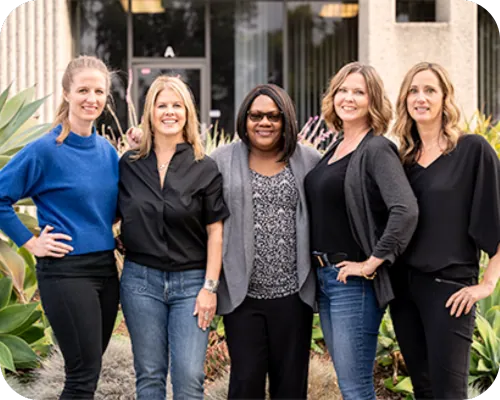
The Stages Learning team gathered at the original Pioneer warehouse

The Pioneer warehouse

The whole Stages team — the people who pack, design, write, and ship the kits.

Where we've been · where we're going

Twenty-five years of building toward the same thing.

Different decade, different scale, same posture — meet every child where they are and put real tools in the hands of the people teaching them.

A kitchen-table company.

Angela Nelson packed the first Stages kits by hand for families raising kids on the autism spectrum. The catalog was a few typed pages, the inventory lived in the dining room, and the shipping label was her name. Word travelled family-to-family long before it ever travelled school-to-school.


The teacher just teaches.

Walk into the classroom and it's already set up for every student in it. The next lesson is queued. The matching materials are on the shelf. The IEP is tracking from the data the teacher took yesterday. Teachers, paras, specialists, and family all see the same student. A Stages coach shows up when it's hard.

Built with AI. Anchored in evidence.

We're building the next layer of ARIS on deep AI integration — video-based assessment that captures what a child can do without a worksheet, automatic data capture so teachers stop choosing between teaching and documenting, and a coaching layer that guides teachers in the moment with the same evidence their Stages coach sees. The work is the same. The support around it gets smarter.

What we believe

Five things we won't compromise on.

These are the pillars every product decision, every hire, every coaching visit gets measured against.

  1. 01

    Serve the mission, not ourselves.

    Every product decision starts with one question: does this actually help a real child learn? If the answer's no, we don't ship it.

    Substance over status, every time.

  2. 02

    Remove the obstacles that limit learning.

    Most barriers to early learning are practical, not magical — confusing curriculum, materials that don't match the lesson, data systems that punish teachers, IEPs that float free of the classroom. We pull those barriers apart, one at a time.

    Not one more thing on a teacher's plate.

  3. 03

    High-quality, user-centered design.

    Our materials are built for the people who actually use them — teachers, paras, therapists, parents. Standards-aligned, evidence-based, and tested in real classrooms before we call them ready.

    Not a focus group, a Tuesday morning.

  4. 04

    Work hard and smart.

    We're a small team trying to make a big difference. That means continuous improvement, honest conversation about what isn't working, and the discipline to keep building until it does.

    Excellence is a habit, not a press release.

  5. 05

    Intrinsic motivation and curiosity.

    Innovation comes from people who keep learning. We hire for curiosity, we protect the time to dig in, and we make space for the kind of questions that lead somewhere new.

    If we stop being curious, we'll stop being useful.

A.N.

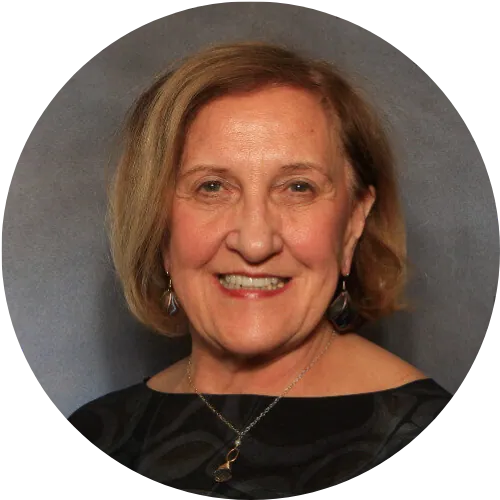
Founder portrait

photo coming

The founder

From a kitchen table to every classroom.

Angela Nelson founded Stages Learning in 1997, packing the first kits herself for families raising kids on the autism spectrum. Twenty-five years later, the catalog has grown into a complete early-learning platform — but the founding question hasn't changed.

What does this child actually need to learn, and how do we put it within reach of the people teaching them?

Angela still tests every new lesson with real teachers before it ships.

Woman-owned · since day one

A woman-owned business for every one of its 25 years.

Stages has been woman-owned and woman-led from the kitchen table forward. We think diversity in leadership brings strength, empathy, and a sharper eye for the kinds of learners other curricula leave behind — which is, at its core, what this work is about.

Read the full woman-owned story

Our advisory board

Four people who hold us to a higher bar.

Special education evolves fast. Our advisors keep us connected to current research, ground-level practice, and the policy shifts that affect every district we serve.

Headshot of Chris Dede, Ed.D.

Chris Dede, Ed.D.

Senior Research Fellow, Harvard Graduate School of Education

Pioneering researcher in emerging learning technologies and immersive simulations for K–12 education.

Headshot of John Richards, Ph.D.

John Richards, Ph.D.

Adjunct Lecturer, Harvard Graduate School of Education

Three decades shaping the educational technology industry — Sesame Workshop, JASON Foundation, Consortium for School Networking.

Headshot of David Dockterman, Ed.D.

David Dockterman, Ed.D.

Lecturer, Harvard Graduate School of Education

Pioneer of educational software design with Tom Snyder Productions and Scholastic; specializes in mindset, motivation, and adaptive learning.

Headshot of Kathy Hurley

Kathy Hurley

Co-Founder, Girls Thinking Global · Education Industry Veteran

Forty-plus years in K–12 publishing and edtech leadership; champion for equity and access in education.

See each advisor in depth →

Want to talk to us?

Schools, clinics, families — we'd love to hear from you. A 30-minute walkthrough is the fastest way to see whether Stages is the right fit for the learners in your room.

Have a quick question? Send us a note →