
Social Skills & Autism
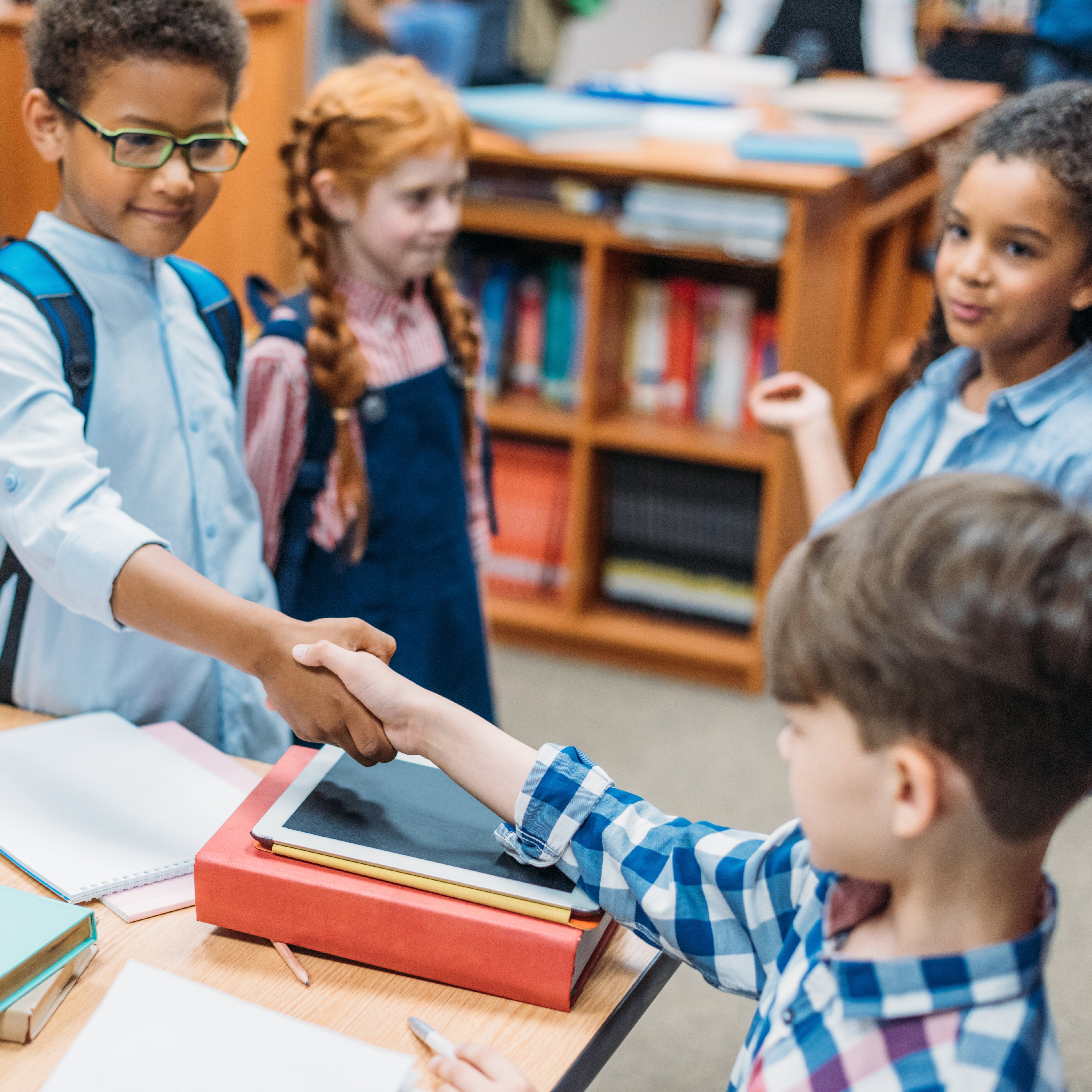
Autism Spectrum Disorder is characterized by deficits in social communication and interaction. This can include challenges in social-emotional reciprocity and non-verbal communication used in social interactions. This can often lead to children with autism having a hard time developing and maintaining meaningful relationships with their peers.
| Stages Learning Emotion Cards |
What are “Social Skills”?
Social skills are unspoken rules for social interactions that allow us to make meaning of what others do in the world. Most typically developing individuals tend to naturally pick up on these implicit rules and regulations. However, many individuals with autism often do not pick them up with the same ease. Therefore, it is important that school staff make an effort to make these implicit concepts more explicit. Many students with autism need to have social expectations clearly explained, modeled, practiced, and reinforced.
How to Support Social Skills Development
In the Classroom
It is important to be aware of the challenges that may exist for students with autism in the classroom setting. These classroom management techniques could make a big difference for students with social skills deficits:
Supervision during unstructured time
- Keep in mind that unstructured time such as recess and free play are the most challenging times for students with autism as it may be difficult for them to interact with their peers. Providing structured support to these students, such as suggesting a specific game or peer they could engage with, may help the child navigate these situations more successfully.
Maintain realistic expectations
- Some of the classroom rules that apply to more typically developing students may not apply to students with autism. For instance, things like maintaining eye contact may not be appropriate when working with a student with autism.
Keep a watchful eye for bullying
- Current research suggests that children with Autism Spectrum Disorder are more than three times as likely to be bullied and left out in comparison to their same-aged peers (Twyman et al., 2010). It is important to keep this in mind when working with a student with autism, as he or she may not always be aware that he or she is being targeted and will therefore not be able to report the incidents him or herself.
Selection of teams and partners
- If you leave it up to the class to pick partners, students with autism and other children with special needs are sometimes chosen last, causing unnecessary humiliation. If teachers utilize assigned seats in classrooms, it offers an opportunity to protect marginalized children while maximizing social inclusion with their peers. By providing structure, there is less opportunity for bullying to thrive in the school environment.
Modeling acceptance of differences
- School staff should openly discuss exceptionalities and differences among children while modeling appreciation for each child as a valued member of the school.
| Stages Learning Emotion Cards |
In Small Groups or Individual Counseling
School counselors can get involved by providing support to students with autism either through small groups or individual check-ins. Although there are many components that create the foundation for social skills development, the following four areas are a good place to start when it comes to peer interactions in the school environment.
Communication
- Help children develop listening and attending skills and teach ways to show others that they are listening. Counselors should teach students with autism how to give and take during a conversation, what topics to discuss with their peers based on common interests, and how to read body language and facial expressions.
Friendship
- Counselors can help students with autism define friendship and how to determine if a peer is a good friend. It can also be beneficial to discuss why it is important to have friends and how to maintain friendships. Additionally, children with autism should be given the strategies to appropriately resolve conflicts with their peers.
| Stages Learning Sequencing Cards |
Manners and expected behaviors
- Counselors should help students discern expected behaviors in relation to the situation or environment. Children with autism may have difficulty grasping the notion that there are hidden rules that exist in every situation and everyone is responsible for following them. The Stages Learning Sequencing Cards help students to learn the logical sequence of events for common activities to practice anticipating next steps.
 |
| Stages Learning Emotion Cards |
Identifying/Expressing Emotions
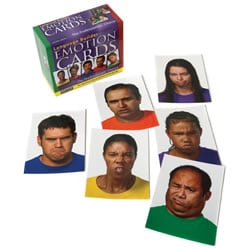
- Emotional identification is crucial in order to teach empathy and reciprocity. In order to engage in a social interaction, an individual must be able to take the perspective of his or her peer and adjust the interaction accordingly. The Stages Learning Language Builder Emotion cards help students identify and discuss feelings and emotions. Each card features an individual modeling a facial expression accompanied by discussion prompts on the back. The prompts include questions such as “Why do they feel that way?” and “What might happen next?”
References:
Autism Speaks. (n.d.). Retrieved from https://www.autismspeaks.org/related-services/social-skills?page=4
Cappadocia, M., Weiss, J., & Pepler, D. (2012). Bullying Experiences Among Children and Youth with Autism Spectrum Disorders. Journal Of Autism & Developmental Disorders, 42(2), 266-277. doi:10.1007/s10803-011-1241-x
J.E. (n.d.). Social-Emotional Learning: Identifying Emotions in Ourselves. Retrieved from http://www.funderstanding.com/featured/social-emotional-learning-identifying-emotions-in-ourselves/
Comments
No comments yet — be the first to share your thoughts.